3D Anamorphic Animation for Dubai Metro & Mall Screens


A flat screen showing a product floating off its own display, or seeming to break through the frame entirely, stops people in a way a standard digital ad rarely does. 3D anamorphic animation Dubai metro mall screens work has become one of the more effective formats for reaching audiences in high-footfall, captive environments, where standard advertising

often gets ignored simply because there’s so much of it.

For brands considering this format specifically for metro stations and shopping mall placements, rather than the standalone street billboards this technique is more commonly

associated with, understanding what makes these environments different matters for both production planning and expected impact. This guide breaks down how anamorphic content works, what’s distinct about producing for metro and mall screens specifically, and what to.expect from the production process.

What Anamorphic Video Production Company Dubai Studios Actually Create

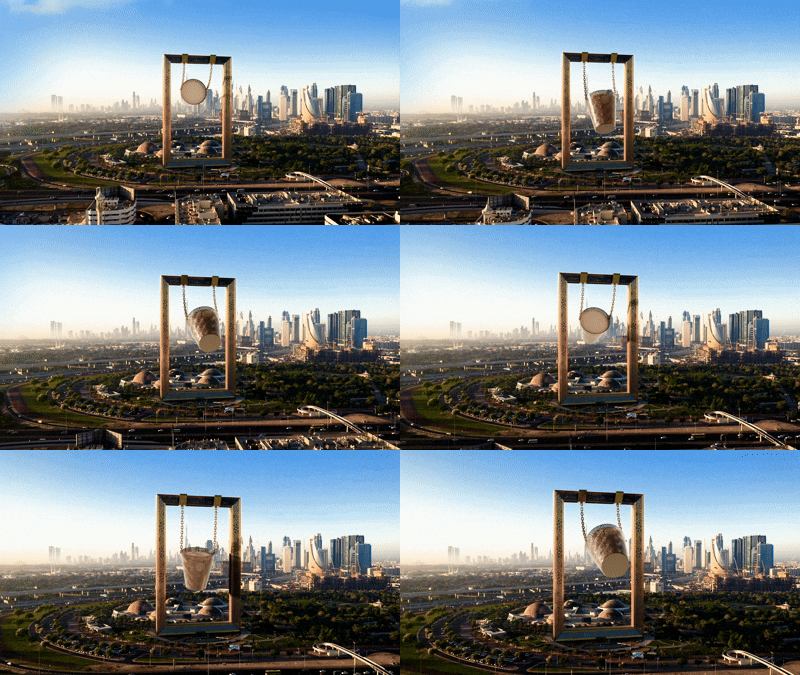
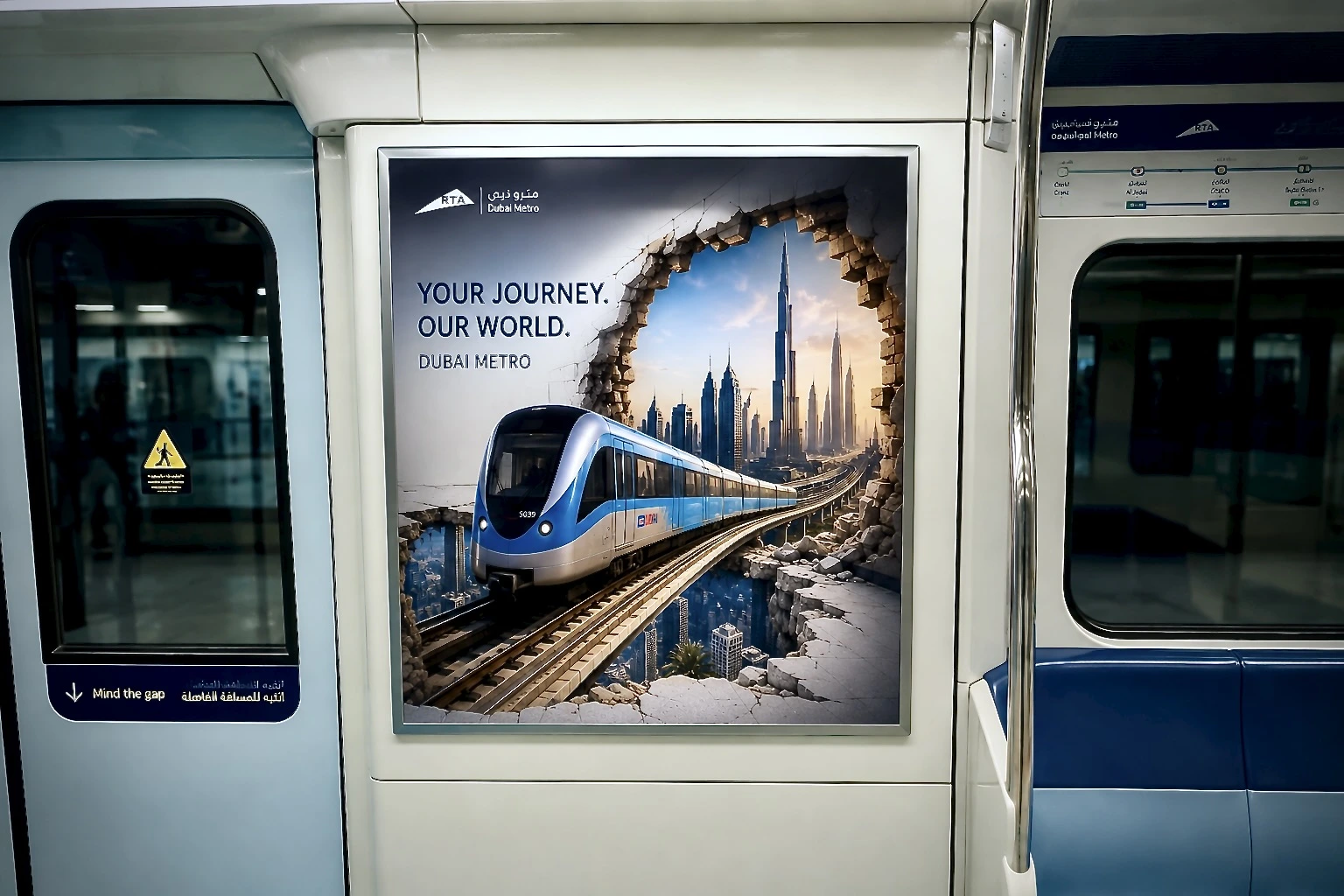
An Anamorphic Video Production Company Dubai brands work with builds content using forced perspective and precise 3D rendering to create the illusion of depth on what is physically a flat screen. This “naked-eye 3D” effect requires no special glasses, relying instead on carefully calculated perspective, lighting, and animation to make objects appear to float, extend, or leap out of the screen when viewed from the correct angle.

The effect depends entirely on precise alignment between the 3D content and the physical screen’s geometry, which is why this format demands significantly more technical planning than standard 2D digital advertising content.

Anamorphic LED Screen Content Dubai: How the Illusion Actually Works

Anamorphic LED Screen Content Dubai relies on a specific production process most standard video content doesn’t require:

● 3D modeling and animation built specifically around the intended viewing angle, not a generic front-facing composition.

● Perspective calibration matched precisely to the physical screen’s dimensions, curvature, or corner-join geometry, since even small misalignments break the illusion.

● Lighting and shadow work designed to reinforce depth cues that trick the eye into perceiving three-dimensional space on a flat surface.

● On-site testing, ideally viewing the content on the actual screen before final delivery, since lighting conditions and screen brightness affect how convincingly the illusion reads in person.

This is meaningfully more technical than standard motion graphics or digital signage content, closer in complexity to the VFX and 3D animation work covered in Panda Creations’ 3D animation and VFX services.

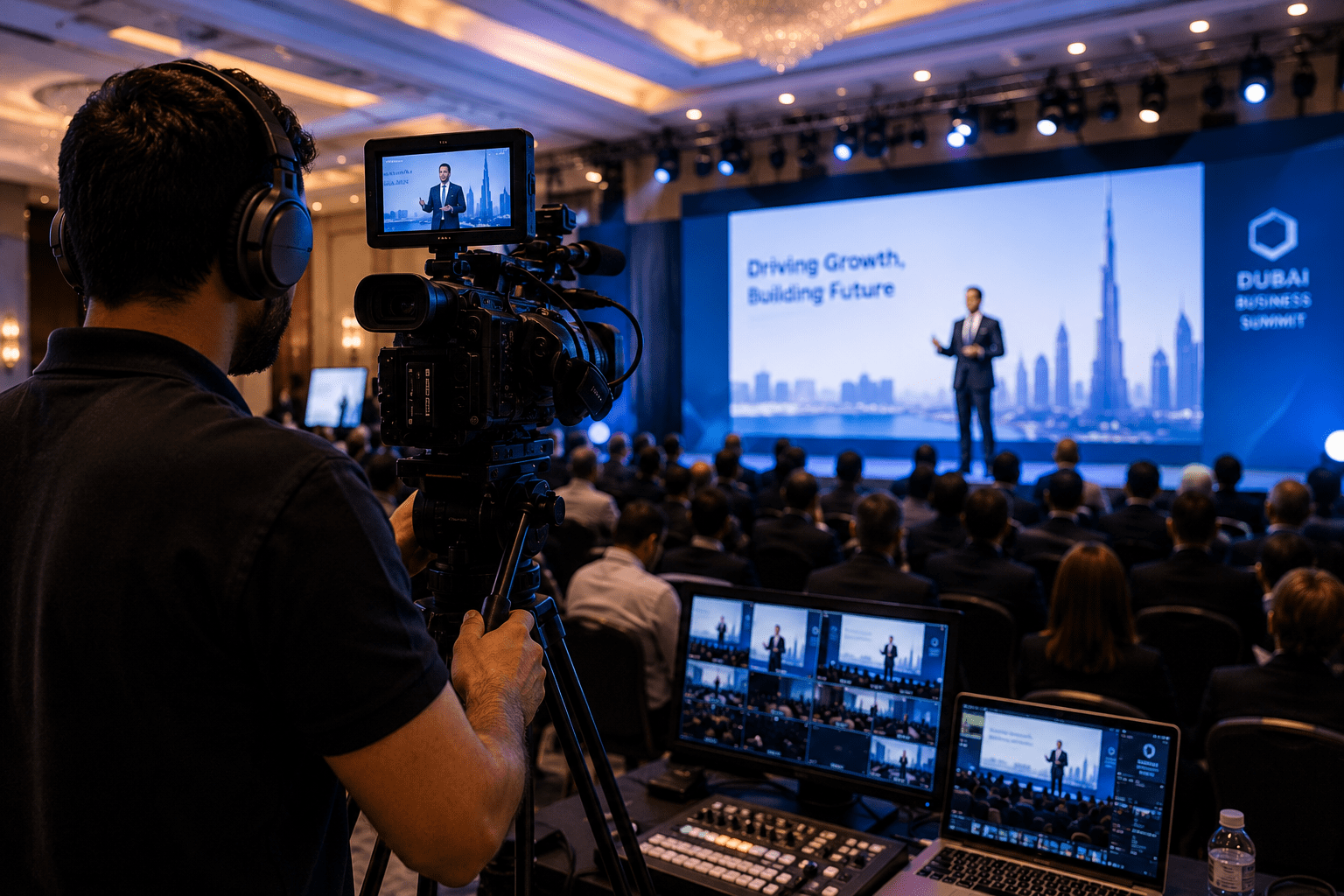
Top Trends in 3D Anamorphic Advertising across UAE shopping malls and event venues featuring immersive digital displays, interactive visual effects, and cutting-edge 3D marketing experiences.

Metro Screen Advertising Dubai: A DistinctEnvironment From Street Billboards

Metro Screen Advertising Dubai carries production considerations that differ meaningfully from the large-format street billboards anamorphic advertising is more commonly associated with:


● Closer, more sustained viewing distance. Commuters typically view metro screens from much closer range and for longer duration than someone glancing at a billboard from a moving vehicle, which changes how detail and pacing should be designed.

● Indoor, controlled lighting conditions. Unlike outdoor billboards competing with daylight and weather, metro environments offer more consistent lighting, which can allow for more nuanced color and contrast work in the content itself.


● Multiple viewing angles from a moving crowd. Commuters approach and pass metro screens from varied angles and walking speeds, which affects how the illusion should be calibrated compared to a fixed-viewpoint billboard.

Mall Digital Screen Advertising UAE: Captive, High-Dwell Audiences

Mall Digital Screen Advertising UAE placements benefit from something metro and street placements generally don’t: audiences with more time and less urgency. Shoppers moving through a mall are often in a more relaxed, browsing mindset than commuters rushing to a train, which can support slightly longer or more elaborate anamorphic sequences than a fast-transit environment would suit.


Mall environments also frequently feature premium, large-format LED installations at key atrium or entrance locations, offering more dramatic scale for anamorphic content than typical street-level screens.

3D OOH Advertising Dubai: Why the Format Performs

3D OOH Advertising Dubai content has shown measurable impact in the region’s advertising landscape. Industry data has reported meaningful increases in purchase intent following exposure to 3D anamorphic advertisements, alongside notably high recall rates compared to standard digital billboard content. This performance advantage comes from the format’s core strength: it genuinely interrupts the visual monotony of standard advertising, capturing attention through novelty and spectacle in a way flat content generally can’t replicate.

Naked Eye 3D Content Dubai: Production Complexity vs. Standard Video

Naked Eye 3D Content Dubai work requires meaningfully more pre-production planning than standard commercial video. Unlike a typical shoot where creative concepts can be refined relatively flexibly during production, anamorphic content needs the perspective and screen geometry locked in early, since the entire visual effect depends on precise technical alignment that can’t be easily adjusted after the 3D animation work is complete. 


This makes early coordination with the screen owner or venue, confirming exact dimensions, viewing angles, and any screen curvature or corner geometry, an essential first step before creative production begins.

Anamorphic Billboard Production UAE: Lessons That Apply to Screen Placements

Anamorphic Billboard Production UAE experience, built through high-profile street-level campaigns, directly informs how metro and mall screen content should be approached, even though the viewing context differs. Panda Creations’ work producing 3D anamorphic content for ADNOC’s outdoor billboard campaign demonstrates the same core production discipline required for indoor screen placements: meticulous concept development, precise technical execution, and on-site verification that the illusion reads correctly before final delivery.


For a broader look at how this format is being used across the region’s retail and event spaces specifically, this existing guide on trends in 3D anamorphic advertising across UAE shopping malls and events covers the wider landscape this piece builds on.

DOOH Content Production Dubai: Planning for Digital Out-of-Home Placements

DOOH Content Production Dubai for anamorphic metro and mall screens generally follows a structured process:


1. Venue and screen specification confirmation, gathering exact dimensions, geometry, and viewing angle data from the screen owner or venue operator.


2. Concept development, designing a creative concept specifically suited to the confirmed screen geometry and expected viewing behavior.


3. 3D modeling and animation, building the content with perspective calibrated precisely to the target screen.


4. Technical review and adjustment, checking the rendered content against the actual screen specifications before final delivery.


5. On-site testing where possible, verifying the illusion holds up correctly under the venue’s actual lighting and viewing conditions.

Anamorphic Advertising Cost Dubai: What Drives the Investment

Anamorphic Advertising Cost Dubai for metro and mall screen content is generally driven by 3D modeling and animation complexity, the precision required for perspective calibration to a specific screen’s geometry, and the number of unique screen placements a single campaign needs to be adapted for. Content built for one specific screen geometry generally can’t be reused directly on a differently shaped or positioned screen without recalibration, which is an important budgeting consideration for campaigns spanning multiple locations. For a broader look at how production costs are typically structured, this cost breakdown for corporate video production in the UAE covers cost logic that applies similarly to specialized production formats like this one 

LED Cube Content Production Dubai: The Most

Advanced Application


LED Cube Content Production Dubai represents one of the more technically demanding applications of this format, where content needs to work convincingly across an L-shaped or curved multi-screen configuration rather than a single flat panel. This setup, joining two or more LED screens at an angle, allows content creators to manipulate light and shadow so objects appear to float in space or extend toward the viewer, requiring even more precise technical calibration than a single-panel anamorphic screen.

Choosing the Right Anamorphic Production Partner


Given the technical precision this format demands, evaluating a studio’s actual anamorphic portfolio, not just general 3D animation work, matters more here than in most other production categories. This guide on how to choose a video production company in Dubai covers broader vendor evaluation criteria worth applying with particular attention to demonstrated anamorphic project experience.

FREQUENTLY ASKED QUESTIONS

The illusion depends on content being precisely calibrated to the specific screen’s dimensions and, for multi-panel setups, its geometry. Standard flat screens can display anamorphic content, but the production needs to be built specifically for that screen’s exact specifications.

Metro placements typically involve closer, more sustained viewing distance and controlled indoor lighting, compared to the fast, distant viewing and variable outdoor lighting conditions of a street billboard, which affects pacing and visual detail decisions.

Generally not without recalibration, since the illusion depends on precise alignment with a specific screen’s dimensions and geometry. Content built for one screen typically needs adjustment to work correctly on a differently configured display.

The format’s novelty and visual spectacle interrupt the usual pattern of advertising audiences tune out, contributing to notably higher recall and purchase intent metrics reported in regional advertising industry data.

Timelines vary by complexity, but anamorphic projects generally require more pre-production and technical calibration time than standard video content, given the precision needed to match content to specific screen geometry.

Gallery


Anamorphic content for metro and mall screens brings the same attention-grabbing illusion that’s made street-level anamorphic billboards so effective in Dubai, adapted for the closer, more sustained viewing conditions of indoor, high-footfall environments. Getting the technical calibration right is what separates a genuinely convincing illusion from content that just looks like a flat video on a screen. If you’re planning an anamorphic campaign for a metro or mall placement, you can start a project with Panda Creations directly.


contact us

View more interesting topics

Tab 1
Tab 2
Tab 3
In-House Drone Team vs Hiring a DroneProduction Company: Cost Compared

Arabian drill | Corporate Video Production | Dubai | Brand film


At some point, most businesses using drone content regularly ask the same question: would it be cheaper to just buy the equipment and hire a pilot ourselves? The in-house drone team vs hiring a drone production company decision looks simple on the surface, buy once versus pay per project, but the real comparison involves licensing, insurance, equipment depreciation, and ongoing compliance costs that rarely show up in a first-pass budget estimate.


For companies evaluating this build-versus-buy decision, this guide breaks down the actual cost categories on both sides, grounded in what’s publicly known about UAE drone regulations and typical cost drivers, so you can make this call with a realistic picture rather than a rough guess. Where exact figures genuinely vary or aren’t publicly confirmed, we’ve

flagged that clearly rather than presenting a false level of precision.

Should I Buy a Drone for My Business: The Real Question Behind the Question

Should I Buy a Drone for My Business isn’t really a question about the drone itself, it’s a question about whether your business generates enough recurring aerial content need to justify the fixed costs of ownership, licensing, and compliance, versus the variable, pay-as-you-go cost of hiring a specialist for each project.


Businesses that tend to benefit from in-house capability generally share a few traits: frequent, recurring aerial content needs (weekly or monthly, not occasional), predictable project types that don’t require highly specialized equipment or techniques, and enough volume to justify a dedicated team member’s time even between drone-specific tasks

In-House Drone Team Cost Dubai: The Full Cost Breakdown

In-House Drone Team Cost Dubai involves several distinct cost categories that need to be evaluated together, not in isolation.


Regulatory Compliance and Licensing


Operating a drone commercially in the UAE requires more than simply owning the equipment. A commercial operation generally needs a UAS Operator Certificate issued by the GCAA, individual pilot licensing through a GCAA-approved training course including a medical fitness certificate and practical flight exam, individual aircraft registration, a compliant operations manual covering safety procedures, and third-party liability insurance, with minimum coverage requirements reported at around AED 1,000,000 per aircraft. Dubai-based operations also typically require separate DCAA registration and advance flight permit approval on top of the federal GCAA requirements.


These aren’t one-time costs either. Licenses and registrations generally require periodic renewal, and insurance is an ongoing annual expense, not a single upfront payment.


Equipment Investment


Drone Equipment Investment Cost varies enormously depending on the tier of equipment needed. Basic consumer-grade drones sit at a much lower price point than cinema-grade drones capable of RAW footage and heavier camera payloads, the kind typically required for commercial-quality brand or real estate work. Equipment also depreciates and requires

periodic replacement or upgrade as technology and client expectations evolve, plus ongoing costs for batteries, propellers, and repairs.


Commercial Drone License Cost UAE


Commercial Drone License Cost UAE for individual pilot training and certification adds a per-person cost on top of equipment, since each pilot operating under the business’s UAS Operator Certificate typically needs their own valid Remote Pilot License. Training course fees for drone certification vary by provider and course level, and this is a cost that scales

with team size, not a single fixed investment.


Drone Pilot Salary UAE


Drone Pilot Salary UAE figures vary significantly depending on experience, whether the role is dedicated full-time to drone operations or combined with other production responsibilities, and industry sector. Salary survey estimates for this role in the UAE vary considerably across different data sources, so treat any single published figure as a rough starting point

rather than a confirmed benchmark, and it’s worth researching current, role-specific data directly before budgeting a hire.


A dedicated in-house pilot also represents a cost even during periods without active drone projects, since salary continues regardless of project volume, unlike outsourced production which is only paid for when actually used.

Drone Videography Services Dubai

Hiring a Drone Company vs Buying Equipment: The Outsourced Cost Structure

Hiring a Drone Company vs Buying Equipment shifts the cost structure entirely from fixed, ongoing overhead to variable, per-project spending. When outsourcing to a specialist production company:


● Licensing, insurance, and compliance are the vendor’s responsibility, not an added cost or administrative burden on your business.

● Equipment is the vendor’s investment, meaning you have access to whatever tier of equipment a project needs without the upfront capital cost or depreciation risk.

● You pay only for actual projects, with no cost incurred during periods when you don’t need aerial content.

● Specialized expertise comes built in, since an established drone production company has already navigated the regulatory and technical learning curve your business would otherwise absorb internally.


For a detailed breakdown of what a typical outsourced drone project actually costs, this full drone filming cost breakdown for Dubai covers permit fees, equipment tiers, and other cost factors that make up a typical project quote.

Freelance Drone Pilot vs Agency Dubai: A Middle Ground Worth Considering

Freelance Drone Pilot vs Agency Dubai represents a third option between full in-house ownership and a full-service production company. Hiring an independent, licensed freelance pilot can reduce cost compared to a full agency engagement for straightforward, single-operator projects, but it generally comes without the broader production support, backup equipment, creative direction, and post-production capability, that a full-service studio provides. This option tends to suit businesses with simple, well-defined aerial needs rather than projects requiring integration with broader video production, such as the combined aerial and ground-level footage covered in this guide on real estate drone videography.

Cost of Owning a Drone for Business: Running the Real Numbers

Cost of Owning a Drone for Business only makes financial sense when the math actually works out favorably compared to sustained outsourcing costs. A practical way to evaluate this:


1. Estimate your actual annual drone content volume, in number of projects or shoot days, based on realistic, not aspirational, need.

2. Add up the full in-house cost stack: equipment purchase and depreciation, licensing and training for all pilots, insurance, ongoing compliance administration, and salary or time allocation.

3. Compare that total against what the equivalent number of outsourced projects would cost at typical market rates.

4. Factor in the value of avoided regulatory risk and access to specialized equipment or techniques an outsourced partner already has.


For most businesses without frequent, high-volume, predictable aerial content needs, the fixed costs of in-house ownership, particularly licensing, insurance, and idle-time salary, tend to outweigh the savings compared to project-based outsourcing.

Drone Production Company Dubai: What You Gain Beyond Just the Flight

A Drone Production Company Dubai offers value beyond simply operating the aircraft. This typically includes creative direction and shot planning, integration with broader video and photography production, established relationships and experience navigating local permit processes efficiently, and access to a range of equipment tiers suited to different project

needs, from a simple real estate establishing shot to more technically demanding commercial or cinematic work. This breadth is difficult and expensive to replicate with a single in-house hire, whose expertise is naturally limited to their own experience and the equipment your business has invested in.

Making the Decision for Your Business

The right choice ultimately depends on your actual content volume, project variety, and appetite for taking on regulatory and equipment overhead directly. This guide on how to choose a video production company in Dubai covers broader vendor evaluation criteria worth applying if you decide outsourcing is the better fit for your business, and this comparison of drone videography versus drone photography is worth reviewing regardless of which route you choose, since it affects what you’d need to budget or source either way.

FREQUENTLY ASKED QUESTIONS

For businesses with occasional or varied aerial content needs, outsourcing is generally more cost-effective, since it avoids the fixed costs of licensing, insurance, and equipment ownership. Frequent, high-volume, predictable needs are where in-house ownership is more likely to pay off, though this should be calculated against your specific project volume.

Commercial drone operation generally requires a GCAA-issued UAS Operator Certificate, individual pilot

Remote Pilot Licenses, aircraft registration, a compliant operations manual, and third-party liability insurance, alongside separate DCAA registration for Dubai-based operations.

Costs include equipment purchase and depreciation, licensing and training for each pilot, insurance, ongoing regulatory compliance, and salary, which together typically represent a significant fixed investment regardless of how much the equipment is actually used.

Yes, and it can reduce cost for simple, well-defined projects, though freelancers typically don’t offer the broader production support, backup equipment, and creative integration a full-service studio

provides.

Operating commercially without proper GCAA and DCAA authorization carries significant financial penalties and can affect a business’s licensing status, making compliance a genuine cost consideration, not just an administrative formality.

Gallery


The in-house versus outsourced decision comes down to matching your actual, sustained content volume against the real fixed costs of ownership, licensing, and compliance, not just the sticker price of a drone. For most businesses without consistently high aerial content demand, outsourcing to an established production company remains the more financially sound choice. If you’re weighing this decision for your business, you can start a project with Panda Creations directly to get a realistic sense of what outsourced drone production would actually cost for your specific needs.


contact us

View more interesting topics

Tab 1
Tab 2
Tab 3

AI Video Production Company in Dubai


Panda Creations is an AI video production company in Dubai built for brands that need premium video content without the cost and timeline of a full traditional shoot. We combine generative AI video tools with real editorial craft, so every

project you receive is fast to produce, on-brand, and ready to publish across every platform your audience actually watches.


Businesses across Dubai and the wider UAE are shifting budgets toward AI powered video production Dubai brands can rely on, because it collapses weeks of pre-production, filming, and editing into days without sacrificing the polish a brand needs to be taken seriously. Panda Creations sits at the center of that shift, pairing fast AI video editing across the UAE with a team of editors, colorists, and sound designers who know exactly how to finish what the AI starts.


Call us today to discuss your project — [Panda Creations phone number].

What Is AI Video Production (And How It’s Different From Traditional Editing)

AI video production uses generative AI models, automated editing engines, and machine-assisted post-production tools to build video content from a script, a prompt, or existing footage dramatically reducing the manual hours a traditional production requires. Traditional video production depends on a full crew, physical sets, multiple shoot days, and a manual editing timeline that can stretch for weeks. Automated video editing tools now compress that same workflow by handling scene generation, rough cuts, color matching, and even voiceover, while a human editor still directs the creative decisions that make a video feel intentional rather than generic.

This is the distinction that matters most for brands evaluating an AI video production company in Dubai: AI is not replacing the editor, it’s replacing the slowest parts of the process. Text-to-video AI production can build establishing shots or product visuals that would otherwise require a full studio day. AI Voice Over and AI dubbing produce broadcast-quality narration in multiple languages without booking a recording session. AI color grading matches footage from different sources in minutes instead of hours. What remains entirely human is the judgment pacing, storytelling, brand tone, and the final quality pass that separates a usable video from a video that actually performs for the client For a market like Dubai, where campaigns, product launches, and social content move on tight timelines, that combination of AI speed and human finishing is what makes AI powered video production genuinely competitive with traditional filming, not just a cheaper substitute for it.

The Technology Behind Our AI Video Production

We work with a curated stack of generative video, voice, and image-to-video models, chosen project by project depending on the look, format, and brand tone you need from photorealistic product renders to stylized motion content. That flexibility matters: no single AI model handles every use case well, and part of what makes us worth hiring is knowing which tool fits which brief, then finishing the output to a broadcast-ready standard rather than publishing raw AI generations.

ADNOC Corporate Infographics Panda Creations

Our AI Video Production Services in Dubai

3D Interactive Product Viewer Dubai: Beyond Simple Rotation

A 3D Interactive Product Viewer Dubai can extend well beyond basic rotation, particularly when built from a rendered 3D model rather than photographed stills. Because the underlying asset is a genuine 3D model rather than a sequence of flat images, interactive viewers can support:

● Zoom functionality, letting customers examine fine detail without losing image quality.

● Real-time lighting changes, showing how a product looks under different lighting conditions.

● Full 3D navigation, allowing rotation on multiple axes rather than a single horizontal spin.

This level of interactivity typically requires web integration beyond a simple image carousel, embedding an actual 3D viewer into the product page rather than a pre-rendered image sequence.

Panda Creations offers a full range of AI video production services in Dubai, built around the specific formats and industries that drive results in this market.


AI-Powered Corporate Video Production


Corporate video production using AI lets internal training modules, leadership communications, investor updates, and company culture videos get produced faster and localized into multiple languages without re-shooting a single scene. We

use AI voiceover and AI dubbing to deliver Arabic, English, and multilingual versions of the same corporate video from a single production pass a workflow that’s become standard practice for UAE corporates operating across the GCC.


AI Social Media and Reels Content


Short-form content is the highest-volume request we get, and it’s where automated video editing genuinely saves the most time. As an AI-driven video editing agency in Dubai, our workflow can turn one long-form asset into a full

week of Reels, TikToks, and YouTube Shorts recut, resized, and captioned for each platform’s native format, with AI handling the repetitive resizing and pacing work while our editors handle the hook, the story beat, and the call to action.


AI Product and E-Commerce Video Production


E-commerce brands use AI-driven video marketing content to turn static product photography into dynamic product videos at a fraction of the cost of a full studio shoot. This is one of the fastest-growing use cases for AI powered video production

in Dubai’s retail and e-commerce sector, where product catalogs update constantly and traditional filming simply can’t keep pace with demand.


AI Real Estate Video Production


Dubai’s property market moves fast, and AI-generated video has become a genuine advantage for developers and agencies that need listing videos, walkthroughs, and launch campaigns produced in days rather than weeks. We combine AI-generated visuals with real production footage and 3D assets so every property video feels premium, accurate, and ready for investor-facing campaigns.


AI-Enhanced Post-Production


Beyond generation, our AI enhanced video post production Dubai services cover automated color grading, AI upscaling of lower-resolution footage, noise reduction, subtitle generation, and sound design applied to both AI-generated and

traditionally-filmed footage. This is where a best AI video company Dubai brands trust separates itself: the technology accelerates the work, but every frame still goes through a human quality pass before delivery.

Our AI Video Production Process

Every project follows a structured process designed to keep AI video editing services fast without losing creative control.


Concept and Script. 

We start with your brief, brand guidelines, and objective whether that’s a product launch, a corporate announcement, or a social campaign and build a script and shot plan around it.


AI Generation.


 Using generative AI video, text to video tools, and AI VoiceOver, we build the raw creative assets: scenes, narration, motion graphics, and initial cuts, generated far faster than a traditional shoot would allow.


Human Editing and Quality Pass. 


This is the step most AI-only providers skip. Our editors review every AI-generated element for pacing, brand consistency, and visual accuracy, then apply color grading, sound design, and final motion graphics polish before anything ships.


Delivery. 


You receive a master file optimized for every platform you need  from LinkedIn and YouTube to Instagram Reels and broadcast along with any localized or multilingual versions your campaign requires.

Why Choose Panda Creations for AI Video Production in Dubai

Choosing an AI video production company in Dubai comes down to trust as much as speed you need a partner who understands both the technology and the market it’s being used in.


Human-plus-AI workflow. 


We don’t deliver raw AI output. Every AI-generated commercial video we produce goes through professional editing, color, and sound before it reaches you, which is why brands treat our work as ready-to-publish rather than a rough draft.


UAE market experience.


 As a Dubai-based AI video production company, we understand the cultural, linguistic, and brand-safety expectations of GCC audiences  something offshore or purely automated providers consistently miss.


Commercial usage rights.


Every AI-generated video we deliver is cleared for commercial use, so there’s no ambiguity around campaign rights or platform compliance when you’re paying for media placement.


Fast, transparent turnaround.


 Because AI video production removes the slowest manual steps, most projects move from brief to delivery in days, with

clear milestones at every stage of the process.


Multi-format delivery. 


One production pass, multiple deliverables  long-form, short-form, multilingual, and platform-specific cuts, without re-shooting or re- briefing our team.

Industries We Serve

Panda Creations delivers AI video production and AI video editing services across

the sectors driving Dubai’s content demand.


Real Estate. 


Listing videos, project launch films, and investor-facing campaigns produced fast enough to match Dubai’s release cycles, blending AI visuals with real footage and 3D renders.


Retail and E-Commerce. 


Product videos, catalog content, and paid social creative built at the volume fast-moving retail brands actually need, without a studio shoot for every SKU.


Corporate and Training.


 Internal communications, onboarding modules, and leadership video, localized into multiple languages using AI voiceover and dubbing in a single production pass.


Hospitality. 


Brand films, venue showcases, and guest-facing content that captures atmosphere and experience for hotels, restaurants, and leisure brands across the UAE.


Events.


 Recap videos, promotional teasers, and highlight reels turned around quickly enough to still be relevant while the event is fresh in your audience’s mind.

FREQUENTLY ASKED QUESTIONS

Yes. AI video production typically costs significantly less than traditional filming because it removes the need for a full crew, physical sets, and multi-day shoots, while still delivering broadcast-quality output.

Yes, when produced by a professional AI video production company. Panda Creations delivers AI video content that’s fully cleared for commercial use across TV, paid social, and digital ad campaigns.

Most AI-powered video production projects move from brief to final delivery in a matter of days, compared to the multiple weeks a traditional shoot and edit typically require.

Yes. AI voiceover and AI dubbing make it especially efficient for corporate video production, allowing one video to be localized into multiple languages without additional filming.

Not when it’s produced correctly. At Panda Creations, every AI-generated asset goes through human editing, color grading, and sound design, so the final video meets the same quality bar as traditionally filmed content.

Yes. Many of our strongest projects blend AI-generated visuals with real production footage,

giving brands the speed of AI and the authenticity of real, on-location filming in the same video.

Real estate, e-commerce, corporate, hospitality, and events see the fastest returns, mainly because each of these sectors needs high volumes of video content on short, recurring timelines.

Gallery


Get Started With Dubai’s AI Video Production Team If your brand needs video content that moves as fast as your campaigns do, Panda Creations is ready to build it. From AI video production and AI video editing services to fully AI-enhanced post-production, our team turns your brief into publish-ready video without the traditional production timeline.

Call us today to start your project 


contact us

View more interesting topics

Tab 1
Tab 2
Tab 3

360-Degree Product Render Dubai:Interactive Product Visualization


A static product photo tells a customer what an item looks like from one angle. A 360-degree view lets them figure that out for themselves, rotating a product on screen the way they

would in a store. 360 degree product render Dubai work has become a genuine conversion tool for e-commerce brands, not just a visual upgrade, since customers researching a purchase online increasingly expect this level of interactivity before they commit.


For brands weighing whether this format fits their product catalogue, understanding how 360-degree visualization actually works, and the real technical differences between the ways it can be produced, matters before briefing a project. This guide breaks down the two core approaches, where each fits best, and what to expect from a production process built around this format.

360 Product Photography Dubai vs. Rendered 360 Views: Two Different Approaches

360 Product Photography Dubai and rendered 360-degree views solve the same problem,

letting a customer rotate and examine a product on screen, but they’re produced through

entirely different processes.

Photographed 360 Spins


360 Spin Photography Dubai is captured using a motorized turntable that rotates a physical product in small increments while a fixed camera captures a photo at each stage, typically anywhere from 24 to 72 individual frames depending on how smooth the final rotation needs to be. These stills are then stitched together into a single interactive sequence that plays as

the viewer clicks and drags. This approach requires the physical product to be available and photographed, meaning it

captures the item exactly as it exists, including any real-world texture, reflection, or imperfection.

Rendered 360 Views

A 360 Product Render Company Dubai builds this same interactive experience entirely from a 3D digital model, generating each rotational frame through rendering rather than physical photography. Because no physical photography is involved, rendered 360 views can be produced before a product is manufactured, and can be re-rendered instantly in different

colors or configurations without any new photography needed.

Interactive Product Visualization UAE: When to Choose Each Method

Interactive Product Visualization UAE decisions between photography and rendering generally come down to a few practical factors:


Photographed 360 spins tend to work better when:


● The product already physically exists and is readily available for shooting.

● Authentic material texture and real-world detail matter more than production flexibility.

● The brand has a smaller number of SKUs, making individual photography sessions manageable. 


Rendered 360 views tend to work better when:


● The product has multiple color or configuration variants that would otherwise require separate photography for each.

● The product doesn’t yet exist in final manufactured form.

● The brand needs to update visuals (new angles, new variants) without a full reshoot.


Many brands ultimately choose based on catalogue scale: a handful of hero products often justify photography, while large, variant-heavy catalogues tend to benefit more from rendering’s reusability.

Top Trends in 3D Anamorphic Advertising across UAE shopping malls and event venues featuring immersive digital displays, interactive visual effects, and cutting-edge 3D marketing experiences.

E-Commerce 360 Product View Dubai: Why It Improves Conversion

E-Commerce 360 Product View Dubai content addresses a specific gap in online shopping: the inability to physically handle a product before buying. Letting customers rotate an item and examine it from every angle helps close that gap, building the kind of purchase confidence that static images alone often can’t provide, particularly for products where texture, build quality, or design detail genuinely influences a buying decision.


This is one of the reasons 360-degree content has become increasingly standard for higher-consideration purchases, electronics, furniture, fashion accessories, and similar categories where customers want to examine a product closely before committing.

3D Interactive Product Viewer Dubai: Beyond Simple Rotation

A 3D Interactive Product Viewer Dubai can extend well beyond basic rotation, particularly when built from a rendered 3D model rather than photographed stills. Because the underlying asset is a genuine 3D model rather than a sequence of flat images, interactive viewers can support:

● Zoom functionality, letting customers examine fine detail without losing image quality.

● Real-time lighting changes, showing how a product looks under different lighting conditions.

● Full 3D navigation, allowing rotation on multiple axes rather than a single horizontal spin.

This level of interactivity typically requires web integration beyond a simple image carousel, embedding an actual 3D viewer into the product page rather than a pre-rendered image sequence.

Product Configurator Dubai: The Most Advanced Application

Product Configurator Dubai tools represent the most technically advanced use of this underlying 3D rendering technology, letting customers change a product’s color, material, or configuration in real time and see the result immediately, rather than browsing between separate pre-rendered images for each variant. This is particularly valuable for products with extensive customization options, furniture, vehicles, or made-to-order items, where showing every possible combination through static photography would be impractical or prohibitively expensive.


Building a configurator requires the underlying 3D model to be constructed with this flexibility in mind from the start, since retrofitting configurability onto a model built only for fixed rendering typically requires significant rework.

360 Product Video Dubai: Combining Formats

360 Product Video Dubai sometimes blurs the line between the interactive spin format and standard product video, using a similar rotational capture or render but presenting it as a fixed video sequence rather than a viewer-controlled interactive experience. This can work well for social media or marketing placements where full viewer interactivity isn’t practical,

while still conveying the same sense of dimensional detail a true 360 view provides.

Web-Based Product Visualization Dubai: Technical Considerations

Web-Based Product Visualization Dubai content needs to be built with actual website performance in mind, not just visual quality. A few practical factors matter here:


● File size and loading speed directly affect whether customers actually engage with the interactive view, since a slow-loading 360 viewer often gets abandoned before it finishes loading.


● Mobile compatibility is essential, given how much e-commerce browsing happens on mobile devices, and interactive viewers need to function smoothly with touch controls, not just mouse drag.


● Platform integration varies by e-commerce platform, so confirming compatibility with your specific website or marketplace platform should happen during planning, not after the assets are already produced.

360 View for Online Stores Dubai: Planning Your Project

Before briefing a studio for 360 View for Online Stores Dubai, a few things help the project run smoothly:


● Decide whether photography or rendering fits your product and catalogue scale, based on the factors covered above.

● Confirm your e-commerce platform’s compatibility requirements for interactive content before production begins.

● If considering a configurator, define the full range of variants and customization options upfront, since this shapes how the underlying 3D model needs to be built.

● Consider your catalogue’s growth plans, since a rendered, reusable asset may offer more long-term value if you expect to add variants or new products regularly.


This connects closely with the broader considerations covered in this guide on 3D product rendering for e-commerce and advertising, which covers the underlying rendering process this interactive format builds on. For products where physical photography is the better fit, Panda Creations’ commercial photography services support the photographed 360 spin approach directly.

FREQUENTLY ASKED QUESTIONS

A 360 photo captures a physical product on a rotating turntable across multiple still frames stitched together, while a 360 render is generated entirely from a 3D digital model without any physical photography involved.

Yes, typically. Interactive 360 content requires a viewer plugin or embedded tool that lets customers click and drag to rotate the product, which needs to be compatible with youre-commerce platform.

A configurator uses a flexible 3D model that can be re-rendered in real time as a customer selects different colors, materials, or features, showing the result immediately rather than requiring separate pre-made images for every possible combination.

Yes, if using the rendering approach. Since rendered visuals are built from a 3D model rather than

physical photography, they can be produced from CAD files or design specifications before manufacturing is complete.

It depends on the product category and price point. For higher-consideration purchases where customers want to examine detail closely before buying, even a small catalogue can benefit from the added purchase confidence this format provides.

Gallery


360-degree product visualization gives online shoppers something static photography can’t: the ability to genuinely examine a product before buying. Choosing between photography and rendering, and understanding how far the interactivity can go, from simple rotation to a full configurator, helps brands invest in the right level of technology for their actual catalogue needs. If you’re planning an interactive product visualization project, you can start a project with Panda Creations directly.


contact us

View more interesting topics

Tab 1
Tab 2
Tab 3

How Panda Creations Produced ArabianDrill’s Corporate Film Dubai

Arabian drill | Corporate Video Production | Dubai | Brand film


Some corporate films get shot on a clean studio set with full control over every variable. Others get shot on a working shipyard, in the heat, hauling equipment up port stairs, around

a crew that has an actual rig to operate. The Arabian Drill corporate film Dubai production was firmly the second kind, and the real value of walking through how it came together is in what it shows about producing corporate content under genuinely difficult, uncontrolled conditions.

This case study breaks down how Panda Creations approached the project for Arabian Drilling, one of Saudi Arabia’s leading onshore and offshore drilling companies, from the brief through location filming to final delivery, and what the process reveals about producing corporate video for industrial and B2B clients operating in demanding real-world environments.

The Brief: Corporate Video Case Study Dubai Background

This Corporate Video Case Study Dubai began with a clear commercial goal. Arabian Drilling needed a corporate film to introduce their brand and services to prospective clients, built around a narrative that would showcase the company’s values, capabilities, and operations to a target audience evaluating drilling service providers. For a company competing in a high-stakes, credibility-driven industry, the film needed to do more than look polished, it needed to demonstrate operational expertise and build trust with potential clients making significant procurement decisions.

Oil and Gas Corporate Film Dubai: Why This Project Was Different

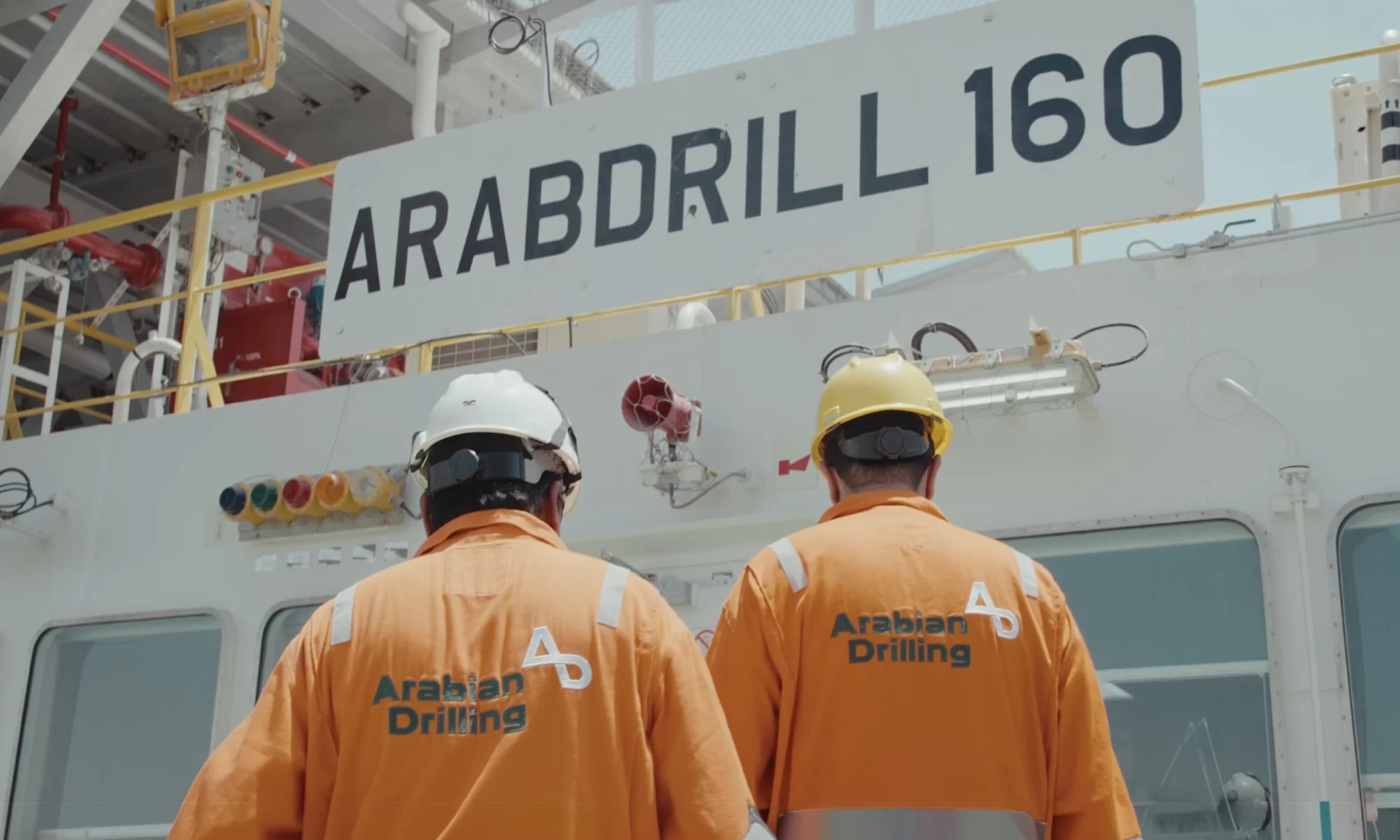
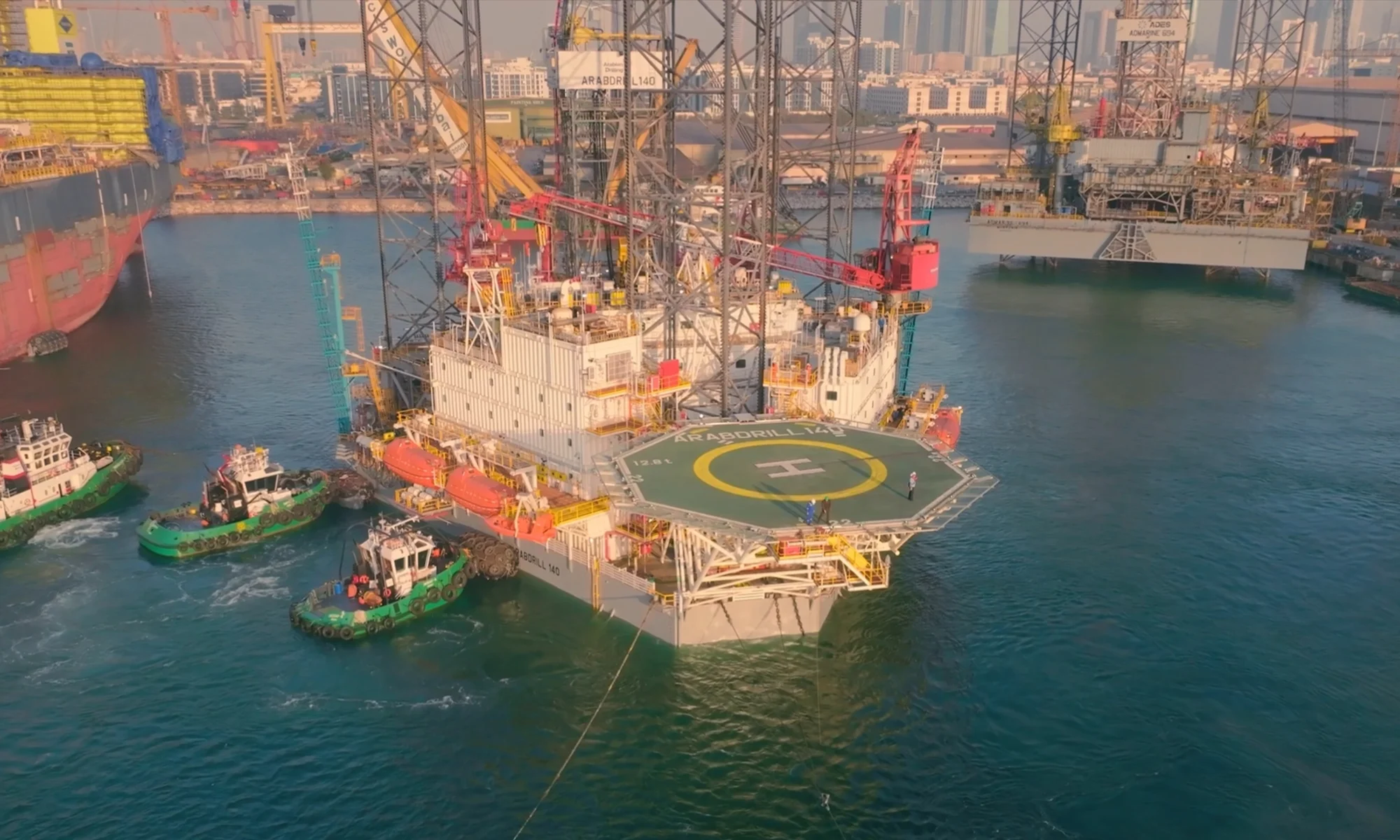
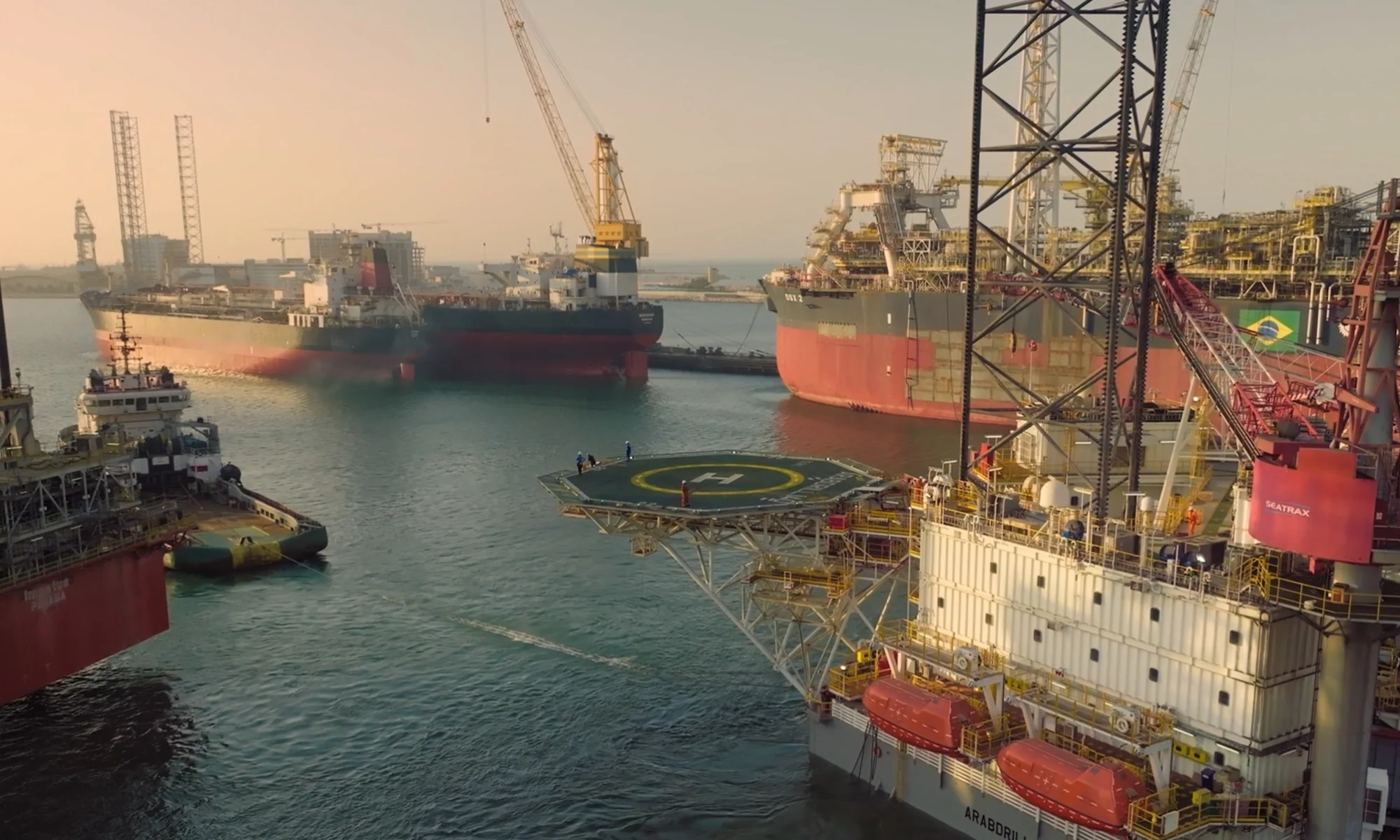
Oil and Gas Corporate Film Dubai work carries production challenges that don’t come up in a typical office-based corporate shoot. This project involved filming rig operations and crew activity directly on location at the DDW Shipyard in Dubai, an active, working port environment rather than a controlled studio setting.

That environment introduced real logistical demands from the outset: equipment had to be carried up port stairs by hand, heat and humidity on site added physical strain throughout the shoot, and near-constant ambient noise on the barge made communication between crew members genuinely difficult. The team also filmed in required protective coveralls throughout, balancing safety compliance with the practical demands of operating camera and lighting equipment.

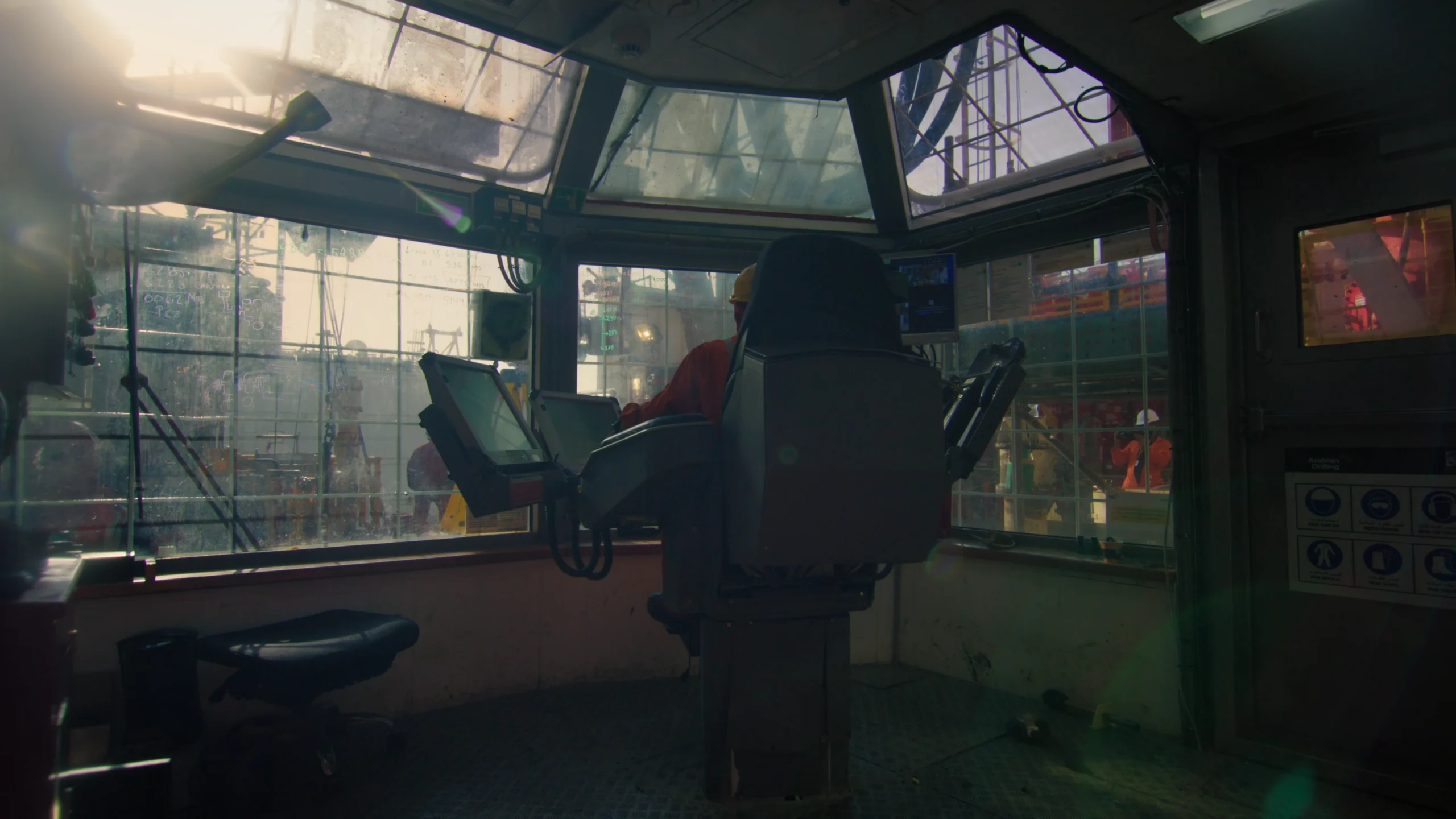
Rig operator handling drilling controls for corporate film

On-Location Corporate Filming Dubai: Capturing Every Department

On-Location Corporate Filming Dubai for this project meant covering the full scope of Arabian Drilling’s operations, requiring the crew to move through every department and location relevant to the story rather than filming from a single fixed setup. This included capturing the rig and its operations in detail, along with candid documentation of the workmanship and coordination happening across the site.


Filming across this many operational areas meant constantly adapting to new lighting conditions, spatial constraints, and safety protocols as the crew moved from one part of the shipyard to the next, all while maintaining visual consistency for the final edit.

Remote Interview Video Production: Solving the Saudi Arabia Challenge

Remote Interview Video Production became a necessary part of this project, since several of Arabian Drilling’s key representatives were based in Saudi Arabia rather than the UAE. Coordinating and agreeing on interview times across this distance added scheduling complexity from the start, and shooting interviews remotely alongside the on-location UAE

footage introduced a technical challenge: different lighting and camera setups across locations naturally produced different color profiles.

 Bringing these remote and on-site interviews together into one visually cohesive film required careful color correction and consistency work in post-production, ensuring representatives filmed thousands of kilometers apart appeared as part of the same unified brand story.

Corporate Film Production Case Study UAE: The Production Approach

This Corporate Film Production Case Study UAE followed a structured three-stage process, with each phase addressing specific project demands.


Pre-Production


● Concept development and creative planning to define the story before any filming began


● Scriptwriting to shape the narrative structure around Arabian Drilling’s core message


● Coordination and scheduling with the client and interview subjects across two countries


● Location scouting and logistics planning for the DDW Shipyard shoot


● Equipment selection and preparation suited to a challenging port environment 


Production


● On-location filming at the DDW Shipyard in Dubai


● Capturing rig operations and day-to-day activities across departments


● Conducting interviews with key representatives, both on-site and remotely


● Candid photography documenting the rig and the team’s work


● Managing logistics and safety protocols throughout the shoot 


Post-Production


● Editing and color correction, critical given the mismatched color profiles from remote interviews


● Integration of titles, branding, and creative visual elements


● Sound design and selection of a professional soundtrack


● Consistency checks and quality control across the full edit


● Final delivery of the finished video, along with raw files shipped via hard drive

Behind the Scenes: What the Crew Actually Dealt With

Behind the Scenes Corporate Video Production work rarely gets shown to clients in the finished product, but it’s often where the real production challenges live. On this project, the crew managed the physical demands of carrying equipment through a working shipyard, adapted to loud, high-heat conditions on the barge, and stayed compliant with strict safety protocols throughout, all while maintaining focus on capturing footage that would ultimately tell a polished, professional brand story.


Coordinating interviews across multiple locations, including remote sessions from Saudi Arabia, required careful upfront planning to preserve visual coherence in the final film, a challenge that speaks directly to the kind of technical and logistical problem-solving industrial and B2B clients should expect a production partner to handle competently.

Industrial Corporate Film Dubai: Lessons for Similar Projects

Industrial Corporate Film Dubai productions, whether in oil and gas, manufacturing, or heavy industry, tend to share certain production realities worth planning for in advance:


● Site conditions rarely match a studio environment. Heat, noise, and physical access constraints are common on active industrial sites and need to be planned for during pre-production, not discovered on shoot day.


● Safety compliance shapes what’s possible. Protective equipment and site protocols affect everything from crew mobility to camera positioning, and production planning needs to account for this from the outset.


● Multi-location interviews need a consistency plan. When key stakeholders are spread across different countries or facilities, color and lighting consistency has to be actively managed in post-production, not assumed to work itself out.


This kind of real-world production planning overlaps closely with the broader principles covered in this guide on pre production planning for commercial films, particularly around location logistics and scheduling coordination.

Corporate Storytelling Video Dubai: The Creative Approach

Beyond the logistics, Corporate Storytelling Video Dubai work like this project centered on distilling Arabian Drilling’s mission and operational values into a coherent narrative. The creative approach prioritized authenticity and safety-conscious documentation over stylized production, using natural light photography, careful post-production techniques, and a

considered soundtrack to build a story that reflected the company’s actual identity rather than a generic industry template. This kind of grounded, credibility-focused storytelling reflects the broader approach covered in Panda Creations’ corporate video production work more generally.

Panda Creations Case Study: What This Project Demonstrates

This Panda Creations Case Study illustrates something that applies well beyond oil and gas: corporate video production for operationally complex, industrial, or multi-location clients requires more than creative skill. It requires a production team comfortable solving real logistical problems, managing safety compliance, coordinating across time zones and locations, and still delivering a visually and narratively cohesive final product despite the challenges encountered along the way.


For businesses in similarly demanding sectors considering a corporate film, this project is a useful reference point for the kind of planning and problem-solving a production partner should bring to the table.

FREQUENTLY ASKED QUESTIONS

Filming took place on an active shipyard, requiring equipment to be carried up port stairs, working through heat, humidity, and constant noise, while also coordinating remote interviews with representatives based in Saudi Arabia.

Several interviews were conducted remotely from Saudi Arabia, which introduced differing color

profiles across locations that needed to be reconciled during post-production color correction.

Working on an active shipyard required the crew to follow strict safety protocols, including wearing

protective coveralls throughout filming, which shaped how the production team could move and operate equipment on site.

Timelines vary by project complexity, but productions involving multi-location filming, remote interviews, and industrial site access generally require more extended pre-production planning than a standard single-location corporate shoot.

That real-world production challenges, difficult site conditions, safety compliance, and multi-location coordination, need to be planned for from the pre-production stage, not treated as obstacles to solve on the day of filming.

Gallery


The Arabian Drilling corporate film shows what’s actually involved in producing credible, professional B2B content under genuinely demanding conditions, not a controlled studio ideal. If your business operates in a similarly complex or industrial environment and needs a production partner comfortable solving real logistical challenges, you can start a project with Panda Creations directly.


contact us

View more interesting topics

Tab 1
Tab 2
Tab 3

Drone Videography vs DronePhotography in Dubai: Which Do YouNeed?

Arabian drill | Corporate Video Production | Dubai | Brand film


Booking a drone shoot without deciding between video and stills first is one of the most common ways brands end up with the wrong deliverable for their actual marketing need. Drone videography vs drone photography Dubai decisions often get made by default rather than by matching the format to what the content is actually meant to achieve.

For businesses planning a real estate listing, a brand campaign, or social content, understanding what separates these two formats, and when one clearly serves the goal better than the other, saves both budget and a second shoot down the line. This guide breaks down the practical differences, the use cases where each format wins, and how the two are often combined efficiently from a single flight.

Drone Video Production Dubai vs Drone Photography Services Dubai: The Core Difference

Drone Video Production Dubai captures continuous aerial footage, motion, camera movement, and sequences that unfold over time. Drone Photography Services Dubai captures static aerial images, single frozen moments from above.


That distinction sounds obvious, but it drives real differences in how each is produced and used:


● Video communicates scale and movement. A drone video flying alongside a property or tracking through a landscape conveys spatial relationships and flow that a still image can’t capture.


● Photography communicates a single, polished moment. A well-composed aerial photo works as a standalone asset, ideal for listings, print, or static digital ads where a single strong image does the job.


● Video requires more post-production time. Editing, color grading, and stabilization for footage generally take longer than retouching a set of still images.


● Photography allows faster turnaround. Aerial stills can often be delivered more quickly than a fully edited video sequence.

Aerial Photography vs Videography: When the Choice

Actually Matters

Aerial Photography vs Videography decisions matter most when a project has a specific, singular goal, rather than a general need for “some drone content.”


Choose photography when:


● You need static images for a listing, brochure, or print advertisement.

● The goal is a small number of polished hero images rather than a full sequence.

● Turnaround time is tight, and stills can be delivered faster than an edited video.


Choose video when:


● The content needs to convey movement, scale, or a journey through a space.

● It’s destined for a website hero section, social media, or a broadcast-style campaign.

● The story benefits from a sequence rather than a single frozen image.

When to Use Drone Photography: Common Scenarios

When to Use Drone Photography becomes the clear choice in several specific situations:


Real Estate Listings


Drone Real Estate Photography Dubai is often the primary drone deliverable for property listings, since portals and brokers typically require still images rather than video for standard listing pages. A handful of well-composed aerial stills, showing the property boundary, surrounding context, and overall layout, usually covers this need efficiently.


Print and Static Digital Ads


Any advertising format that runs as a static image rather than a video naturally calls forphotography rather than footage that would need to be reduced to a single frame anyway.


Quick-Turnaround Marketing Needs


When a project needs aerial content fast, photography generally moves through post-production faster than video, making it the more practical choice under a tight deadline.

When to Use Drone Video: Common Scenarios

When to Use Drone Video is the stronger choice when the content needs to do more than show a single view.

Cinematic Property Tours


Real estate developments, particularly premium or off-plan projects, often benefit from drone video that flies through and around a property, conveying scale and setting in a way static images can’t, especially for developments still under construction where a full aerial sequence helps sell the vision.

Brand and Commercial Campaigns


Aerial footage integrated into a broader commercial film adds production value and scale, particularly for automotive, tourism, and lifestyle brands where movement and setting reinforce the story being told.

Event Coverage


Drone video captures the scale and energy of large events, festivals, or gatherings in a way a still photo of the crowd typically can’t communicate as effectively.

Drone Marketing Content Dubai: Why Many Brands Need Both

Drone Marketing Content Dubai campaigns frequently benefit from producing both formats from a single flight session, rather than choosing one exclusively. A drone operator can typically capture aerial video footage and extract high-quality still frames, or shoot dedicated photo passes alongside video sequences, within the same shoot day. This approach delivers assets for multiple channels, a website hero video, social media clips, and static images for listings or print, without the added cost of booking separate flights and permits for each format.

Aerial Video vs Aerial Photo Cost: Budgeting Considerations

Aerial Video vs Aerial Photo Cost differs primarily due to post-production time rather than the flight itself. The drone flight and permit costs are largely the same regardless of whether the pilot is capturing stills or footage, but video typically carries additional cost for editing, color grading, and stabilization work after the shoot. Because of this, bundling both formats into a single flight is often more cost-effective than commissioning them as separate projects, since the largest shared cost, the flight and regulatory permit, only needs to be paid once. For a fuller breakdown of what drives aerial content pricing overall, this full drone filming cost breakdown for Dubai covers permit fees, equipment tiers, and other cost factors relevant to both formats.

Drone Content for Social Media Dubai: Format Considerations

Drone Content for Social Media Dubai generally favors video over stills, since aerial footage tends to perform well in short-form social formats where movement and scale capture attention quickly in a fast-scrolling feed. That said, striking aerial stills can still work well for static social posts or as supporting content alongside a primary video, particularly for brands maintaining a consistent visual grid across their social presence.

Choosing Between Drone Photo and Video: A Practical Framework

Rather than defaulting to whichever format feels more impressive, Choosing Between Drone Photo and Video is best approached by asking a few direct questions:


1. Where will this content actually be used, a listing page, a social feed, a broadcast ad? The destination often dictates the format.


2. Does the story benefit from movement, or does a single strong composition do the job?


3. What’s the turnaround timeline? Stills generally move faster through post-production.


4. Could this project reasonably need both? If so, planning a combined flight from the outset is usually more efficient than booking separately later.

Working With the Right Drone Partner

Whichever format fits your project, working with a studio that can capture both photography and video within a single, properly permitted flight saves both time and budget. This overlaps directly with the regulatory and planning considerations covered in the drone filming cost breakdown, and this guide on how to choose a video production company in Dubai covers

broader vendor evaluation criteria worth applying to aerial specialists specifically.

FREQUENTLY ASKED QUESTIONS

Generally, yes, mainly because video requires more post-production time for editing and color grading. Flight and permit costs are typically similar for both formats.

Yes, and it’s often the most cost-effective approach, since the flight and permit costs are shared, while photography and video assets can both be produced from the same shoot day.

Most standard listing platforms primarily require still images, though video can add significant value for premium or off-plan property marketing where conveying scale and setting matters more.

Video generally performs better for social engagement, since movement and scale capture attention quickly in a fast-scrolling feed, though striking stills can complement a broader social content strategy.

Consider where the content will be used and whether the story benefits from movement or a single strong image. If genuinely unsure, planning for both from a single flight is usually the safest and most

cost-effective choice.

Gallery


Drone photography and drone videography solve different problems, and choosing correctly from the start saves both budget and a second shoot down the line. If your project could benefit from either, or both, you can start a project with Panda Creations directly to plan the right aerial content for your specific goals.


contact us

View more interesting topics

Tab 1
Tab 2
Tab 3

Pre-Production Planning for Commercial Films Dubai

Video Production Dubai | Corporate Film Dubai | Sharjah Asset Management | Commercial Video UAE | Creative Corporate Video Production | CGI Corporate Film | ARRI Cinematic Shoot | Product Commercial Dubai | Panda Creations | High-End Corporate Video


Most production problems trace back to the same root cause: something wasn’t planned

properly before the camera ever rolled. Pre-production planning commercial films Dubai

work is where a project’s success or failure is largely decided, well before shoot day, even though it’s the stage clients see the least of.


For brands and marketing teams commissioning their first commercial, or trying to understand why a production quote includes weeks of planning before filming even starts, this guide breaks down exactly what happens during pre-production, why each stage

matters, and what a well-run planning process actually looks like.

What Is Pre-Production and Why It Matters

Commercial Film Pre-Production Process work covers everything that happens between a project being greenlit and the first day of actual filming. It’s easy to underestimate because it’s less visible than the shoot itself, but a rushed or skipped pre-production stage is one of the most common reasons commercial shoots go over budget, run behind schedule, or fail to capture what the brand actually needed. Strong pre-production reduces risk on shoot day by resolving as many decisions and

unknowns as possible in advance, rather than trying to solve them under time pressure with a full crew standing by.

Video Production Planning Checklist Dubai: The Core Stages

Video Production Planning Checklist Dubai work generally moves through the following

stages, though the order and depth can shift depending on project complexity.


1. Concept and Creative Brief Development

Before anything else, the creative direction needs to be defined and agreed upon: the

message, tone, target audience, and overall visual approach. This stage typically involves

close collaboration between the brand and production team to make sure the creative vision aligns with business objectives before moving further into planning.

2. Scriptwriting

Once the concept is approved, a script or shot outline translates the creative direction into concrete scenes, dialogue, and narrative structure. For commercials without dialogue, this stage still defines pacing, visual sequence, and key messaging beats.

3. Storyboarding for Commercial Video

Storyboarding for Commercial Video visualizes the script scene by scene before filming,

mapping out camera angles, composition, and transitions. This is one of the most

cost-effective stages to catch creative misalignment, since revising a storyboard is far

cheaper than reshooting a scene that didn’t match expectations.

4. Location Scouting for Commercial Films Dubai

Location Scouting for Commercial Films Dubai involves identifying, visiting, and securing

filming locations that match the creative vision, while also confirming practical factors like

lighting conditions, access, permits, and noise levels. In Dubai specifically, this stage often includes securing the necessary filming permits well in advance, since location approvals can take meaningful lead time depending on whether the shoot is on public or private property.

5. Casting for Commercial Films Dubai

Casting for Commercial Films Dubai identifies and secures talent, whether that’s

professional actors, brand spokespeople, or real customers and employees for

testimonial-style content. Casting typically involves auditions or portfolio review, followed by scheduling coordination with the rest of the shoot timeline.

6. Crew and Equipment Planning

Based on the creative and technical requirements defined earlier, the production team

assembles the right crew, camera equipment, lighting setup, and any specialized gear, such as drones or tracking rigs, needed to execute the shoot as planned.

7. Film Production Scheduling Dubai

Film Production Scheduling Dubai brings every previous stage together into a detailed

shoot-day timeline, sequencing scenes efficiently based on location availability, cast

schedules, and lighting conditions, while building in reasonable buffer time for the inevitable delays that come with any live shoot.

Commercial AD films | Panda Creations Dubai | Baytuki | BTS

How to Plan a Commercial Shoot: Practical Considerations


How to Plan a Commercial Shoot successfully comes down to a few practical habits that

experienced production teams apply consistently:


● Lock creative direction before scheduling. Changes made after a shoot date is

set become significantly more expensive and disruptive than changes made during

concept development.


● Build in contingency time. Weather, permit delays, or talent availability changes are

common enough that a shoot schedule without buffer time is a shoot schedule likely

to run into trouble.


● Confirm permits early, not last-minute. In Dubai, filming permits, particularly for

public locations or specialized equipment like drones, often require lead time that isn’t

compatible with a fast-tracked production timeline.


● Align stakeholders before shoot day, not during it. Any brand-side approvals or

sign-offs should happen during pre-production, since revisiting creative decisions

mid-shoot wastes expensive crew and equipment time.


Pre-Production Services Dubai: What a Studio Typically Handles


Pre-Production Services Dubai offered by a full-service studio typically extend well beyond  just scriptwriting. A strong production partner manages location scouting and permitting, casting coordination, crew assembly, equipment sourcing, and detailed scheduling, essentially absorbing the logistical complexity so the client’s role stays focused on creative direction and approvals rather than production logistics.


This comprehensive approach is part of what separates a genuinely full-service studio from one that only shows up on shoot day. Panda Creations’ commercial film production service is built around this full pre-production process, not just the filming stage itself.

Pre-Production vs Production vs Post-Production: Understanding the Full Timeline


Pre-Production vs Production vs Post-Production breaks a project into three distinct phases, each with different priorities:


● Pre-production is planning and preparation, concept, script, storyboard, locations,

casting, and scheduling, typically taking longer than most clients expect relative to

the shoot itself.


● Production is the actual filming, usually the shortest phase in terms of calendar

days, but the most resource-intensive in terms of crew and equipment cost per day.


● Post-production is editing, color grading, sound design, and final delivery, often

running in parallel with client review and revision rounds.


Understanding this breakdown helps set realistic expectations for project timelines, since a one-day shoot might still sit within a multi-week overall production schedule once pre- and post-production are accounted for.


Commercial Shoot Planning Company Dubai: What to Look For


When evaluating a Commercial Shoot Planning Company Dubai, a few signals indicate a

studio that takes pre-production seriously rather than rushing toward the shoot:


● A defined pre-production process, walking clients through each stage rather than

jumping straight to scheduling a shoot date.


● Local permit and location expertise, since navigating Dubai’s filming permit

requirements efficiently comes from direct experience, not general production

knowledge.


● Clear communication during planning, keeping clients informed and involved at

each decision point rather than presenting a finished plan with no input opportunity.


● Realistic scheduling, building appropriate buffer time rather than promising

unrealistically compressed timelines that increase risk on shoot day.


This overlaps with the broader vendor evaluation criteria covered in this guide on how to

choose a video production company in Dubai, which applies directly to assessing a studio’s pre-production capability specifically.


How Pre-Production Complexity Varies by Project Type


Pre-production requirements scale significantly based on project type. A luxury brand film, for example, typically requires more extensive location scouting and lighting pre-testing than standard commercial work, as covered in this guide on luxury brand commercial film production. Similarly, FMCG productions often require more detailed shot-list planning upfront to maximize the multiple deliverables needed from a single shoot day, a consideration covered in this guide on FMCG commercial production.

FREQUENTLY ASKED QUESTIONS

Timelines vary significantly by project complexity, but pre-production often takes longer than the shoot itself, particularly when permits, casting, and multiple locations are involved.

Storyboarding is often rushed or skipped on tighter budgets, but doing so increases the risk of creative misalignment being discovered on shoot day, when changes are far more expensive to
make.

Generally, yes. Location scouting is most effective once the script or shot outline is finalized, since location requirements often depend directly on specific scenes described in the script.

Permit timelines vary by location type and required approvals, but it’s generally best to begin the permit process as early as possible in pre-production rather than waiting until closer to the shoot date.

Some compression is possible, but skipping stages entirely, particularly storyboarding or location confirmation, significantly increases the risk of costly issues arising during the actual shoot.

Gallery


The quality of a commercial film is largely determined before filming ever begins. Strong pre-production planning reduces risk, controls cost, and ensures the final result actually matches the creative vision the brand set out to achieve. If you’re planning a commercial shoot and want a production partner who treats pre-production as seriously as the final film, you can start a project with 

Panda Creations directly.


contact us

View more interesting topics

Tab 1
Tab 2
Tab 3
Product Render Video Dubai: 3D Renders for Brands


A product doesn’t need to physically exist to look market-ready on screen. Product render video Dubai work has made it possible for e-commerce brands and advertisers to generate photorealistic product content before manufacturing is even complete, or to produce unlimited angles and variations from a single 3D model instead of reshooting for every color

option or configuration.


For brands managing large product catalogues, launching new products ahead of stock availability, or running advertising campaigns that need visual flexibility, 3D rendering has become a genuinely practical alternative to traditional photography, not just a novelty. This guide breaks down how product rendering actually works, when it makes more sense than photography, and what to expect from a rendering project in Dubai.

What a 3D Product Render Company Dubai Actually Delivers

A 3D Product Render Company Dubai builds a digital 3D model of a product, then applies

materials, textures, and lighting to generate photorealistic images or video without ever

physically photographing the item. The process typically includes:


● 3D modeling – building the product’s exact geometry, often from CAD files,

technical drawings, or detailed reference photography.


● Texturing – applying accurate materials, from matte plastic to brushed metal to

fabric weave, so surfaces read as realistic under render.


● Lighting simulation – recreating studio-quality lighting digitally, giving full control

over highlights, shadows, and reflections.


● Rendering – processing the final images or animation, which can take significant

computing time depending on resolution and complexity.


Once a product’s 3D model exists, it can be reused indefinitely, generating new angles,

colorways, or scene variations without a physical reshoot.

E-Commerce 3D Rendering Dubai: Why Brands Are Adopting It


E-Commerce 3D Rendering Dubai has grown significantly as brands realized the operational advantages beyond visual quality alone.


Unlimited Angles From One Shoot


Once a 3D model is built, generating additional angles, close-ups, or lifestyle scenes

requires no new photography, just new render setups, which is significantly faster and

cheaper than rebooking a photography session for every new requirement.


Consistent Lighting Across an Entire Catalogue


Photographing dozens or hundreds of SKUs with perfectly matched lighting is difficult in

practice. Rendered product images maintain exact lighting consistency across an entire

catalogue, since the lighting setup is digitally identical for every render.


Pre-Launch and Unmanufactured Products


Brands can generate marketing-ready visuals before a product physically exists, which is

particularly valuable for pre-order campaigns, crowdfunding launches, or products still in

late-stage manufacturing.


Color and Configuration Variants


Rather than photographing every color option separately, a single 3D model can be

re-rendered in each variant, dramatically reducing both cost and turnaround time for

products with multiple SKU variations.

3D Product Visualization Dubai: Common Applications


3D Product Visualization Dubai is used across a range of formats, each suited to different

marketing needs.


  • E-Commerce Listings


Clean, consistent product renders for online marketplaces and e-commerce sites, often

including 360-degree spin views that let customers examine a product from every angle.


Digital and Print Advertising


CGI Product Video Production UAE work frequently supports advertising campaigns needing dramatic or stylized product visuals that would be difficult, or impossible, to achieve through practical photography alone.


Packaging Mockups


Brands can visualize packaging design in a photorealistic context before physical packaging is printed, useful for internal approval processes or early marketing material.


Animated Product Films


Product Animation for E-Commerce extends static rendering into motion, useful for

showcasing product mechanisms, assembly, or features that benefit from demonstration

rather than a static image.

3D Render Advertising Dubai: Where Rendering Outperforms Photography


3D Render Advertising Dubai often makes more creative and practical sense than

photography in specific scenarios:


● Impossible or exaggerated environments , placing a product in a scene that

would be impractical or prohibitively expensive to build physically.


● Precise, repeatable framing , ensuring identical camera angles and composition

across a large campaign or product family.


● Products that are difficult to photograph well, such as highly reflective,

transparent, or intricately detailed items that require extensive practical lighting

control.


This overlaps closely with the broader capabilities covered in Panda Creations’ 3D animation

and VFX service, which supports both static rendering and animated product content under one production process.


3D Product Photography vs Rendering: Making the Right Choice


3D Product Photography vs Rendering isn’t always an either-or decision, but understanding the tradeoffs helps brands choose correctly for each use case.


Photography tends to be the better choice when:


● The product already physically exists and is readily available for shooting.


● The brand needs a smaller number of hero images rather than a large catalogue.


● Authentic, unedited realism is a core part of the brand’s visual identity.


Rendering tends to be the better choice when:


● The product has many SKU variants needing consistent visuals.


● The product doesn’t yet exist in final manufactured form.


● The brand needs flexibility to update visuals (new backgrounds, new angles) without

a full reshoot.


Many brands ultimately use both, pairing commercial photography for hero campaign

imagery with rendering for catalogue-scale product listings.


Photorealistic Product Rendering Dubai: What Determines Quality


Photorealistic Product Rendering Dubai quality depends heavily on a few technical factors that separate genuinely convincing renders from ones that look obviously artificial:


● Material accuracy — how convincingly a render replicates real-world surface

properties like reflectivity, texture, and translucency.


● Lighting realism — poorly lit renders often look flat or artificially clean, while

well-executed lighting mimics genuine studio photography.


● Reference quality — renders built from precise CAD files or detailed reference

photography are generally more accurate than those built from limited product

references.


Product Render Pricing Dubai: What Affects Cost


Product Render Pricing Dubai depends primarily on model complexity, the number of

variants or angles required, and the level of photorealism needed. A simple product with few surface details costs less to model and render than a highly detailed or mechanically

complex item. Producing multiple color variants or angles from an existing model adds

relatively little cost compared to the initial 3D build, which is part of why rendering becomes more cost-effective at scale. For a broader look at how production costs are typically structured, this cost breakdown for corporate video production in the UAE covers cost logic that applies similarly to rendering projects.


Choosing a 3D Render Company for Brands Dubai


When evaluating a 3D Render Company for Brands Dubai, look for a portfolio showing

genuine photorealistic work across varied materials, not just simple geometric products.

Studios experienced in both rendering and traditional product photography tend to make

better creative recommendations about which approach actually suits a given product. This guide on how to choose a video production company in Dubai covers vendor evaluation criteria that apply directly to 3D rendering studios as well.

FREQUENTLY ASKED QUESTIONS

It depends on scale. For a single hero image, photography can be more cost-effective. For large catalogues with multiple SKU variants, rendering often becomes significantly cheaper per image once the initial 3D model is built.

The terms are often used interchangeably in product visualization. CGI generally refers to any computer-generated imagery, while rendering specifically describes the process of converting a 3D model into a

final image or video.

Yes, when built from accurate reference data and executed with proper material and lighting work, photorealistic renders can be visually indistinguishable from photography in most marketing contexts.

Not necessarily. CAD files or detailed technical drawings can be used instead, which is particularly useful for pre-launch products that don’t yet exist in manufactured form.

Yes. Once a 3D model exists, it can be animated to show product rotation, assembly, or feature demonstrations, extending the same asset beyond static imagery.

Gallery


3D product rendering has moved from a novelty into a practical, cost-effective tool fore-commerce and advertising, particularly for brands managing large catalogues or launching products ahead of manufacturing. Choosing the right format, rendering, photography, or a
combination of both, depends on your specific product and campaign needs. If you’re planning a product visualization project, you can start a project with 

Panda Creations directly.


contact us

View more interesting topics

Tab 1
Tab 2
Tab 3

Live Broadcast Services Dubai: StreamYour Event to the World

Live broadcast setup Dubai


A live event only reaches the people in the room, unless it’s broadcast to everyone who couldn’t be there. Live broadcast services Dubai work has become essential for conferences, product launches, and corporate events that need to reach a global or remote audience in real time, not just document the event after the fact.


For event organizers and corporate teams planning their first livestream, the gap between “point a camera at the stage” and a genuinely professional broadcast is bigger than it looks.

This guide breaks down what live broadcast production actually involves, the technical requirements behind a reliable stream, and what separates a smooth broadcast from one

that drops out halfway through the keynote.

What a Live Streaming Company Dubai Actually Delivers

A Live Streaming Company Dubai brings together production, technical, and platform expertise to turn a physical event into a reliable, professional-quality live broadcast. This goes well beyond simply pointing a camera at a stage. A full live broadcast service typically covers:


● Multi-camera coverage capturing different angles of the stage, audience, and any presentation screens.


● Live video switching, cutting between camera angles and content in real time as the event unfolds.


● Audio mixing, ensuring microphones, presentation audio, and ambient sound blend cleanly for remote viewers.


● Encoding and platform delivery, converting the live feed into a format that streams reliably to the chosen platform.


● Redundancy planning, building in backup systems so a single point of failure doesn’t take the entire broadcast offline.

Event Live Broadcast Production UAE: How It’s Technically Different From Recorded Video

Event Live Broadcast Production UAE work carries technical demands that standard event videography doesn’t, because there’s no opportunity to fix a mistake in post-production. Everything has to work correctly in real time.

This changes several production priorities:

● Redundancy matters more than almost anything else. Backup internet connections, backup power, and backup recording are standard practice for professional live broadcast, since a single failure is visible to the entire live audience instantly.

● Real-time decision-making replaces editing. A live switcher operator makes camera and content decisions in the moment, requiring more experienced crew than a standard recorded shoot.

● Bandwidth and encoding have to be planned in advance. Streaming quality depends directly on stable upload bandwidth at the venue, which needs to be tested and confirmed well before the event, not discovered as a problem on the day.

Corporate Event Streaming Dubai: Common Use Cases

Corporate Event Streaming Dubai spans a wide range of formats, each with slightly different production needs.

Conferences and Summits


Multi-day events with multiple stages or breakout sessions often require the most complex broadcast setups, sometimes streaming several sessions simultaneously to different audience segments.

Product Launches


Product launches typically combine live broadcast with more cinematic production values, since brand presentation quality matters as much as technical reliability for this kind of high-visibility event.

Town Halls and Internal Communications


Internal corporate broadcasts, such as company-wide town halls, generally prioritize clear audio and reliable delivery over elaborate production value, though the stakes for reliability remain just as high given the internal audience watching live.

Award Ceremonies and Galas


These events often require more elaborate multi-camera coverage and lighting coordination, closer in production complexity to a televised broadcast than a standard corporate stream.

Multi-Camera Live Production Dubai: How Coverage Actually Works

Multi-Camera Live Production Dubai relies on several cameras capturing different angles simultaneously, fed into a live switcher that allows a director to cut between shots in real time, much like a television broadcast. Typical camera positions include:

● A wide shot capturing the full stage for context.

● A tighter shot on the primary speaker or presenter.

● A dedicated feed for any presentation slides or screen content.

● Audience reaction shots, when relevant to the event format.

The switching decisions happening live are what separate a professional broadcast from a single static camera feed, keeping remote viewers engaged the way a well-edited video would, but happening in real time rather than in post-production.

Live Event Video Production Dubai: Planning for Both Live and Recorded Use

Live Event Video Production Dubai projects often need to serve two purposes at once: the live broadcast itself, and a polished recorded version for later use in marketing or archival content. Planning for this dual purpose during pre-production, including camera positioning and audio setup that works for both immediate streaming and later editing, avoids having to

choose between broadcast quality and post-event content value. This overlaps with broader pre-production planning principles covered in this guide on pre-production planning for commercial films, applied specifically to the live event context.

Webcast Production Company Dubai: Platform and Delivery Considerations

A Webcast Production Company Dubai needs to account for where the stream will actually be watched, since delivery requirements differ across platforms.


● YouTube and social platforms generally require different encoding settings and bitrates than dedicated webcast or webinar platforms.


● LinkedIn Live and similar professional platforms often suit corporate and B2B events, aligning with broader platform-specific content strategy covered in this guide on LinkedIn video content production.


● Custom or private platforms are common for internal corporate broadcasts or ticketed virtual events, requiring integration testing well before the live event itself.

Live Streaming Equipment Dubai: What a Professional Setup Requires

Live Streaming Equipment Dubai for a professional broadcast typically includes multiple broadcast-grade cameras, a video switcher for live camera cutting, audio mixing equipment, encoding hardware or software to prepare the feed for streaming, and redundant internet connections to protect against connectivity failure. The specific equipment scale depends heavily on event size and complexity, but redundancy planning, having backup systems for the most failure-prone components, should be standard regardless of event scale.

Conference Live Streaming UAE: Managing Multi-Session Complexity

Conference Live Streaming UAE work for larger events often needs to manage multiple simultaneous sessions, particularly for conferences with breakout tracks running in parallel. This requires more extensive crew and technical planning than a single-stage event, including coordinating multiple switching setups and ensuring each stream has independent redundancy rather than sharing a single point of failure across the entire event.

Hybrid Event Broadcast Dubai: Serving In-Person and Remote Audiences Together

Hybrid Event Broadcast Dubai has become increasingly common, requiring production planning that genuinely serves both audiences rather than treating the livestream as an afterthought to the in-person experience. This often means considering camera angles and audio mixing specifically for the remote viewing experience, not just capturing what’s visible from the back of the room, along with planning for remote audience interaction, such as live Q&A integration, where relevant.

Choosing a Live Broadcast Company for Events Dubai

When evaluating a Live Broadcast Company for Events Dubai, a few signals separate studios genuinely equipped for live production from those better suited to standard recorded event coverage:


● Demonstrated redundancy planning, with clear answers about backup systems for internet, power, and recording.


● Experience with your specific event type, since a conference broadcast and a product launch broadcast require different production approaches.


● Platform delivery expertise, confirming they’ve successfully delivered to your intended streaming platform before.


● Clear technical rehearsal process, testing bandwidth, audio, and switching setups before the actual event, not during it.


Panda Creations’ event and broadcast services cover this full scope, from multi-camera live production through platform delivery for corporate and public events across Dubai. This guide on how to choose a video production company in Dubai also covers broader vendor evaluation criteria worth applying to live broadcast specifically.

FREQUENTLY ASKED QUESTIONS

Bandwidth requirements scale with video quality and the number of simultaneous streams, but a stable,

tested upload connection with backup redundancy is essential regardless of event size, since connectivity issues are the most common cause of live broadcast failures.

A livestream simply broadcasts an event to remote viewers, while a hybrid event is specifically designed to serve in-person and remote audiences as equally engaged participants, often including remote

interaction features like live Q&A.

This depends on event complexity, but most professional corporate broadcasts use at least two to

three cameras, a wide stage shot, a presenter close-up, and a dedicated feed for any presentation content.

Yes, when planned during pre-production. Camera positioning and audio setup can be designed to

serve both the live broadcast and a higher-quality edited version for later marketing or archival use.

Professional live broadcast setups typically include backup internet connections and redundant recording, so a primary connection failure can be managed without losing the stream entirely, provided redundancy was planned in advance.

Gallery


A successful live broadcast comes down to technical reliability as much as production

quality, since there’s no opportunity to fix a mistake after the fact. Planning redundancy, testing platform delivery, and working with a crew experienced in real-time production decisions is what separates a professional stream from a risky one. If you’re planning an event that needs to reach a global or remote audience, you can start a project with Panda Creations directly.


contact us

View more interesting topics

Tab 1
Tab 2
Tab 3

3D Character Animation Dubai: Brand Mascots

3D Animation VFX Dubai


A well-built brand mascot does something a logo can’t: it gives a company a face, a

personality, and a recurring presence audiences actually remember. 3D character

animation Dubai work has become a genuine differentiator for brands trying to stand out in a market saturated with static logos and generic product ads. 

But character work is one of the more technically demanding corners of production. A weak rig makes movement look stiff. Inconsistent design makes a character feel different from one video to the next. For brands considering a custom mascot or character-driven campaign, understanding the actual process, and what separates a professional result from an amateur one, matters before any concept sketching begins. This guide breaks down how 3D character animation actually works and what to expect from a full production.

Brand Mascot Animation Company Dubai: Why Characters Work for Brands

A Brand Mascot Animation Company Dubai brands turn to typically understands that

mascots solve a specific marketing problem: consistency and recall. A well-designed

character can appear across ads, packaging, social content, and customer service

touchpoints, giving a brand a recognizable identity that a rotating cast of live-action talent or generic stock imagery can’t replicate.

Mascots also allow for personality traits, humor, or emotional expression that might feel

forced coming from a live spokesperson but read naturally through an animated character.

Custom Character Animation UAE: The Full Production Process

Custom Character Animation UAE work moves through several distinct stages, each

requiring different skills.


1. Concept and Character Design

Before any 3D work begins, a character starts as concept sketches exploring personality,

proportions, color palette, and visual style. This stage defines who the character is before any technical modeling starts, and revisions here are far cheaper than changes made later in the process.


2. 3D Product… Character Modeling

Once a design is approved, the character is built in 3D, translating flat concept art into a fully dimensional model with accurate proportions and surface detail.

3. Texturing and Surfacing

Materials, colors, and surface details are applied to the 3D model, giving it the final visual

finish, whether that’s a smooth cartoon-style look or a more detailed, semi-realistic character design.

4. Rigging

Character Rigging Services Dubai work builds the internal skeleton and control system that allows a static 3D model to actually move. This is one of the most technically demanding stages of character work, since a poorly built rig limits how naturally a character can walk, gesture, or express emotion later.

5. Animation

With a rig in place, animators bring the character to life, whether that’s a simple looping idle animation, full walk cycles, or complex scripted performances for advertising content.

3D Animation VFX Dubai

3D Character Design Dubai: What Makes a Strong Mascot Design

3D Character Design Dubai that performs well across campaigns tends to share a few traits:

● Simplicity that reads at small sizes. A mascot needs to remain recognizable

whether it’s on a billboard or a small social media thumbnail.

● Distinct silhouette. A character recognizable purely from its outline tends to build

stronger brand recall than one that relies on fine detail to be identifiable.

● Flexibility for varied expressions. Good mascot design anticipates a range of

emotional expressions and poses the character will need across future content, not

just the initial hero pose.

● Alignment with brand personality. A playful, energetic brand needs a very different

character design approach than a premium, understated one. 


Mascot Design and Animation Dubai: Common Use Cases


Mascot Design and Animation Dubai work spans a range of applications beyond a single

hero video.

Advertising Campaigns

Character Animation for Advertising Dubai often anchors a broader campaign, appearing

across TV, social, and digital ads with a consistent personality and voice.

Packaging and Retail

Mascots frequently extend beyond video into packaging design, retail displays, and print

material, requiring character assets built with static as well as animated use in mind.

Social Media Content

Short, recurring mascot content tends to perform well for ongoing brand presence on social platforms, since audiences build familiarity with a character over repeated appearances.

Explainer and Educational Content

Characters can also serve a functional role, guiding viewers through a product explanation or educational content in a more approachable way than a straightforward voiceover.

Animated Brand Mascot Production: Timeline Expectations


Animated Brand Mascot Production typically takes longer than standard product animation, since character work involves more design iteration and technical rigging complexity.Concept design and revisions happen first, followed by modeling and rigging, before any actual animation begins. Brands should expect character-driven projects to require more upfront planning time than simpler explainer or product animation work, particularly if the mascot needs to support a wide range of future poses and expressions. 3D Character Animation Studio UAE: What to Look For When evaluating a 3D Character Animation Studio UAE, a few signals separate studios genuinely capable of character work from those better suited to simpler product animation:


● A portfolio showing actual character work, not just product renders or

environment animation relabeled as character capability.


● Visible rigging quality, since natural, fluid movement is one of the clearest

indicators of a studio’s technical skill level.


● Design range, showing the studio can adapt character style to different brand

personalities rather than repeating one visual formula.


● Clear process transparency, walking through concept, modeling, rigging, and

animation stages rather than treating character work as a single undefined

deliverable.


Panda Creations’ 3D animation and VFX capability covers this full production pipeline, from initial character concept through rigging and final animation. 


Custom Mascot Creation Dubai: Planning Your Brief 


Before briefing a studio for Custom Mascot Creation Dubai, it helps to have a few things

defined:


● A clear sense of brand personality the character should embody.


● Reference examples of visual styles that resonate, or specifically don’t, with the

brand.


● An understanding of where the character will appear (advertising, packaging, social,

all of the above), since this affects how the design and rigging need to be planned.


● A rough sense of how often the character will be used going forward, since this

affects how much flexibility should be built into the rig from the start.


This guide on how to choose a video production company in Dubai covers vendor evaluation criteria worth applying with particular attention to character-specific portfolio evidence.


Brand Character Development Dubai: Beyond a Single Video


Brand Character Development Dubai works best as a long-term investment rather than a

one-off asset. A well-built character, with proper rigging and a flexible design foundation, can be reused across years of campaigns, evolving alongside the brand without needing to be rebuilt from scratch each time. This is part of why upfront investment in solid rigging and design foundations pays off well beyond the first campaign it appears in, similarly to how 3D product rendering creates a reusable asset once the initial 3D model is built.

FREQUENTLY ASKED QUESTIONS

Timelines vary by complexity, but character projects generally take longer than standard product animation due to design
iteration and rigging work, often spanning several weeks from initial concept to a fully animated character.

Character design defines how a character looks, its proportions, style, and personality. Rigging builds the internal control system that allows that design to actually move, which is a separate and
highly technical stage of production.

Yes, and this is one of the main advantages of investing in a well-built character. Once modeled and rigged properly, the same character can be reanimated for new content without rebuilding from scratch.

Yes, particularly for explainer content or humanizing technical products, though the design style typically leans more understated than a consumer-facing mascot might.

Overly complex designs that don’t read clearly at small sizes, or designs that don’t align with the brand’s actual personality, are common reasons a mascot fails to build recognition.

Gallery


Motion graphics fills a genuine gap between static design and full 3D production, offering a faster, more cost-effective way to explain, brand, and elevate video content. Choosing the right format for your specific message, rather than defaulting to whichever animation style
looks most impressive, is what actually makes the content effective. If you’re planning an explainer, title sequence, or brand animation project, you can start a project with Panda Creations directly.


contact us

View more interesting topics

Tab 1
Tab 2
Tab 3